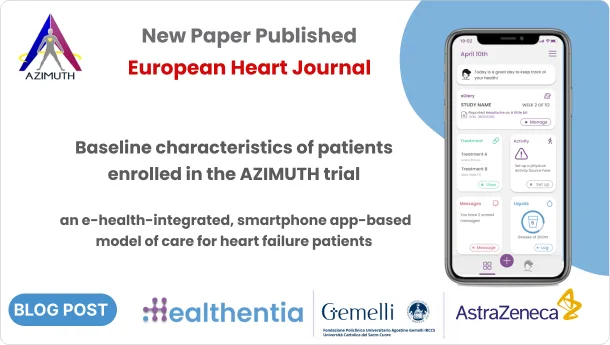
A new study published in the European Heart Journal Open reveals the baseline characteristics of 300 heart failure patients enrolled in the AZIMUTH trial — using Healthentia, an EU-MDR-approved smartphone app, to transform real-world cardiac care.
About the Trial
Heart failure affects more than 64 million people worldwide, yet a persistent implementation gap means many patients never receive — or adhere to — the full spectrum of evidence-based therapies. The AZIMUTH trial directly addresses this by testing whether an app-based, e-health-integrated model of care can close that gap in a real-world setting.
Between December 2021 and January 2024, 300 adults with chronic heart failure were enrolled across four Italian hospitals. Enrolment was not restricted by left ventricular ejection fraction (LVEF), resulting in a genuinely heterogeneous cohort: HFrEF 35.3%, HFmrEF 25.7%, HFpEF 38.7%. Participants had a median age of 66, were predominantly male (78.3%), and carried a high comorbidity burden — hypertension in 81.3%, dyslipidaemia in 75.7%, and ischaemic heart disease in 41%.

Healthentia at the Centre of Care
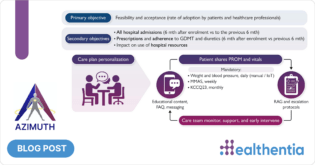
Healthentia, an EU-MDR-approved Software as a Medical Device (SaMD), served as the intervention platform. Patients logged daily weight and blood pressure, reported symptoms, received medication reminders and completed monthly quality-of-life questionnaires, all within the app. Clinicians accessed trend dashboards, received automated alerts and conducted teleconsultations through the same integrated system.
A Clear Opportunity for Digital Care
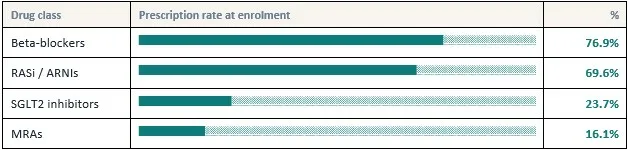
Baseline GDMT prescription rates highlight exactly the gap the trial aims to address. Across all 300 patients, beta-blockers were prescribed in 76.9%, RASi/ARNIs in 69.6%, SGLT2 inhibitors in just 23.7%, and MRAs in 16.1% — below the rates seen in tightly controlled clinical trials, reflecting real-world complexity.
GDMT PRESCRIPTION AT ENROLMENT — All 300 patients
Outcome analyses will track whether the Healthentia-powered model improves GDMT uptake and adherence, reduces hospitalisations and enhances quality of life with patients benchmarked against a propensity-matched control cohort of over 900 individuals.
“Digital health interventions have the potential to optimize care delivery and increase adherence in real-world settings.”